
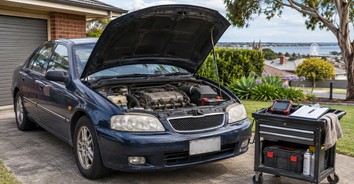
If your car won’t start and you plan to sell it, repair it only if the money you expect to keep after repairs and selling costs comfortably exceeds a firm as-is offer. Get a written quote from your mechanic and check what collection arrangements the buyer’s offer includes. With those two figures and a realistic estimate of the repaired car’s selling price, you can calculate how much you can afford to spend on the repair.
Your net as-is offer is the amount you’ll keep after any costs you still need to pay to complete that sale, such as an outstanding workshop release fee. If the buyer includes collection, deduct only the remaining costs of completing the sale.
Break-even repair cost = expected sale price after repair − other future selling costs − net as-is offer.
For the repair route, other selling costs might include transport, advertising or a roadworthy inspection. Include costs that differ between routes in the relevant column. You can leave out a cost that is the same whichever route you take when comparing the two options. If your repair quote sits right at the break-even figure, both routes leave you with the same amount under your assumptions.
| Illustrative figures in AUD | Repair and sell | Sell as is |
|---|---|---|
| Estimated sale price after repair or net as-is offer | $2,300 | $900 |
| Quoted repair | −$1,150 | — |
| Other future selling costs | −$150 | — |
| Amount you’d keep | $1,000 | $900 |
In this example, the break-even repair cost is $1,250 ($2,300 − $150 − $900). At the quoted price, repairing puts you just $100 ahead. If the mechanic finds another $250 of work, you keep $750, or $150 less than the as-is offer. A sale price of $2,200 would also wipe out the original $100 advantage, even if the repair stays on budget.
These figures are hypothetical. Replace them with your own repair quote, expected sale price and written as-is offer.
Compare vehicles with similar trim, kilometres, condition and registration status. Listing prices are asking prices, so test a lower figure as well, especially if you need to sell quickly. Base your estimate on the condition your car would actually be in after the quoted work.
Ask the workshop which fault it has confirmed, what parts and labour the quote covers, and whether the mechanic can check for other faults before you approve the job. A diagnosis fee pays for finding the problem. If the mechanic has only quoted for diagnosis, leave the repair cost open until you have a figure for the work itself.
Ask what happens if the car starts after the quoted repair but still needs further work before you can sell it. Agree on a spending limit and ask the workshop to call you before it goes ahead with anything extra. If you’ve already paid a diagnostic fee and can’t recover it under either option, leave it out of the comparison. Count any outstanding fees that differ between the two options.
Give the buyer the make, model, year, kilometres and the mechanic’s findings. Explain whether the car starts, rolls and steers, and tell the buyer if it’s at a workshop or somewhere with restricted access. Ask whether the buyer includes collection, what amount they expect to pay and which details they still need to confirm at pickup. If the workshop charges storage or release fees, include any amount you’ll have to pay to complete that sale.
A1 Car Buyers offers free quotes and free car removal in Geelong. Share the exact pickup location when you ask for a quote so the team can confirm access and collection arrangements. If you’re getting several offers, start with our guide to getting a better offer for an old car.
Repair first if the mechanic has confirmed the fault, the scope is clear, and you still come out ahead after testing a lower sale price and a higher repair bill. Consider how long you can wait for the workshop to finish and for a buyer to complete the sale.
Sell as is if the repair already exceeds your break-even figure or if one plausible extra cost would erase the gain. If you’re relying on an offer, confirm when it expires and when the buyer can collect the car.
If you plan to sell privately after repairing the car, check the requirements for your sale route before you budget. VicRoads explains when a Certificate of Roadworthiness is required and which exemptions apply. For the local overview, see selling a car without a Roadworthy Certificate in Geelong and VicRoads’ vehicle selling guide.
Yes. You can ask a buyer who accepts non-running cars for an as-is offer. Share the known faults and confirm whether the buyer can collect it from its current location. Check our guide to preparing your vehicle sale documents.
It can be if the diagnosis could confirm a modest repair that materially improves the amount you’d keep, or if a buyer needs the findings to give you a useful offer. Ask the workshop what the diagnostic fee covers and get an as-is offer first if you can.
Yes, for an initial comparison. Before approving repairs, ask the buyer to confirm the amount, whether collection is included and what they still need to check at pickup.
Ask the workshop whether a buyer can collect directly and check for any outstanding fees. Then confirm access and timing with the buyer. Direct collection may save you a tow if both parties can arrange it. See our Geelong car removal service for pickup enquiries.
Have the repair quote handy when you call. Contact A1 Car Buyers’ damaged car buying team in Geelong or call 0422 149 391. Share the car’s make, model, year, location and the mechanic’s findings so the team can assess the vehicle and discuss collection.
 Car